Scheduling Seminar

Scheduling Seminar

Objective of a virtual seminar on scheduling research and applications is to discuss both the field's newest advancements and survey traditional areas. Seminars take place typically on every second Wednesday through three different time zones (Europe, the Middle East & Africa, North America & South America, and Asia, Australia & Oceania).

Join us on YouTube

Subscribe to mailing list

Join LinkedIn group

Upcoming Talks

Constraint Based Scheduling: A User Perspective

Abstract

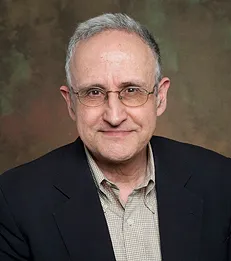
Constraint Programming has been very successful in solving scheduling problems. In this talk we present a number of case studies from a user's perspective, focusing on how to develop a solution with off-the-shelf tools, rather than on the underlying technology. We discuss issues of tool choice, modeling approaches, visualization, and overall integration on sample problems. The first case study is a complex scheduling and planning problem for Siemens Energy, developed within the ASSISTANT European project. The second example looks at models for a Hospital Integrated Resource Management problem, based on the IHTC competition of 2024. The third case study is a generic scheduling tool which we have developed to provide a simple-to-use solution for small to medium sized scheduling problems.

Helmut Simonis
Helmut Simonis

Insight Centre, UCC

🌍

UTC

Mar 04, 14:00 Wed

🇨🇿

Prague

Mar 04, 15:00 Wed

🇺🇸

New York

Mar 04, 09:00 Wed

🇨🇳

Shanghai

Mar 04, 22:00 Wed

SchedulingConstraint ProgrammingModelingScheduling Tool +5 more

Invited by: Zdeněk Hanzálek (CTU in Prague)

Resource Leveling For Scheduling Problems: Some Complexity And Approximation Results

Abstract

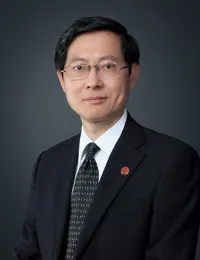
Scheduling problems usually consider resource constraints as hard constraints. In resource leveling instead, a function of resource use is optimized, typically under a deadline constraint. This is motivated by the fact that, in practice, additional resources (e.g., workforce or machines) can be mobilized in order to meet a deadline, yet at some cost. In this talk we will focus on the following setting: given a (target) resource level, our goal is to schedule the jobs in such a way as to best respect this resource level, that is to say, to exceed it as little as possible. We study classical scheduling problems (with or without precedence constraints, with arbitrary or unit processing times,...) in this setting, providing both positive and negative complexity and approximability results.

Bruno Escoffier
Bruno Escoffier

LIP6, Sorbonne U

🌍

UTC

Apr 15, 13:00 Wed

🇨🇿

Prague

Apr 15, 15:00 Wed

🇺🇸

New York

Apr 15, 09:00 Wed

🇨🇳

Shanghai

Apr 15, 21:00 Wed

SchedulingResource levelingComplexityApproximation algorithms

Invited by: Claire Hanen (Sorbonne Uni)

New Approximation Guarantees for The Inventory Staggering Problem

Abstract

Since its inception in the mid-60s, the inventory staggering problem has been explored and exploited in a wide range of application domains, such as production planning, stock control systems, warehousing, and aerospace/defense logistics. However, even with a rich history of academic focus, we are still very much in the dark when it comes to cornerstone computational questions around inventory staggering and to related structural characterizations, with our methodological toolbox being severely under-stocked. The central contribution of this paper consists in devising a host of algorithmic techniques and analytical ideas — some being entirely novel and some leveraging well-studied concepts in combinatorics and number theory — for surpassing essentially all known approximation guarantees for the inventory staggering problem. In particular, our work demonstrates that numerous structural properties open the door for designing polynomial-time approximation schemes; these findings offer substantial improvements over currently available constant-factor approximations and resolve outstanding open questions in their respective contexts (Teo et al., 1998; Hum et al., 2005; Hochbaum and Rao, 2019, 2020). In parallel, we develop new theory around a number of yet-uncharted questions, related to the sampling complexity of peak inventory estimation as well as to the plausibility of groupwise synchronization.

Danny Segev
Danny Segev

Tel Aviv University

🌍

UTC

Jun 10, 13:00 Wed

🇨🇿

Prague

Jun 10, 15:00 Wed

🇺🇸

New York

Jun 10, 09:00 Wed

🇨🇳

Shanghai

Jun 10, 21:00 Wed

Inventory theoryimpossibility resultsapproximation schemesLP-rounding

Invited by: Erwin Pesch (University of Siegen)

Past Talks

76
Christian Blum

CMSA: A Hybrid Metaheuristic for Combinatorial Optimization

Christian Blum , IIIA-CSIC

OptalCP: Constraint Programming with Parallel Search and Reinforcement Learning-Based Acceleration

Vilém Heinz

Vilém Heinz

CTU in Prague, CIIRC

Laurent Houssin

Flow-shop and job-shop robust scheduling problems with budgeted uncertainty

Laurent Houssin , ENAC, Université de Toulouse

Hoogeveen, J.A. (Han)

Planning shunting operations at railway hubs

Hoogeveen, J.A. (Han) , Utrecht University

Rachel R. Chen

Outpatient Appointment Scheduling with Waiting Time Limits

Rachel R. Chen , UC Davis

Zijie Zhou

Efficient and Robust Large Language Model (LLM) Inference Scheduling Optimization

Zijie Zhou , IEDA, HKUST

Changhyun Kwon

Learning-Based Approaches to Combinatorial Optimization in Transportation

Changhyun Kwon , KAIST/Omelet, Inc.

Dan Hermelin

Fairness in Repetitive Scheduling

Dan Hermelin , Ben Gurion Uni

Thomas Lidbetter

Min sum ordering problems with applications to scheduling

Thomas Lidbetter , Rutgers University

Zhi-Long Chen

Online Integrated Production and Distribution Scheduling

Zhi-Long Chen , Univ of Maryland

Rubing Chen

Single-machine hierarchical scheduling with release dates and preemption to minimize the total completion time and a regular criterion

Rubing Chen , Zhengzhou Uni.

Přemysl Šůcha

Machine Learning Inside Decomposition of Scheduling Problems

Přemysl Šůcha , CTU in Prague

Daniele Vigo

One Million ... and Beyond! Solving Huge-Scale Vehicle Routing Problems in a Handful of Minutes

Daniele Vigo , Unibo CIRI-ICT

Defeng Sun

Combinatorial Benders approach to solve the Quay Crane Scheduling Problem

Defeng Sun , DAO lab, NEU China

Norbert Trautmann

Mixed-integer linear programming for project scheduling with resource-unit related constraints

Norbert Trautmann , University of Bern

Philippe Laborie

Hexaly Optimizer for Scheduling

Philippe Laborie , Hexaly

Hugo Chareyre

Operational scheduling in automotive industry

Hugo Chareyre , Artelys

Maciej Drozdowski

Scheduling divisible loads

Maciej Drozdowski , Poznań U. of Tech.

Ender Ozcan

Machine Learning meets Selection Hyper-heuristics

Ender Ozcan , Uni of Nottingham

Matthias Mnich

New Support Size Bounds for Integer Programming, Applied to Makespan Minimization on Uniformly Related Machines

Matthias Mnich , TU Hamburg

André Rossi

Maximizing stability of assembly line balancing schedules under uncertain task duration

André Rossi , Universite PSL

Pieter Smet

Robustness in personnel rostering

Pieter Smet , KU Leuven

Laurent Perron

The CP-SAT solver

Laurent Perron , Google France

Nils Boysen

Scheduling in the e-commerce era: New scheduling problems in order fulfilment and warehousing

Nils Boysen , University of Jena

Ceyda Oğuz

A Matheuristic for the Generalized Order Acceptance and Scheduling Problem

Ceyda Oğuz , Koç University

Klaus Heeger

Minimizing the Weighted Number of Tardy Jobs is W[1]-hard

Klaus Heeger , Ben Gurion Uni

Céline Swennenhuis

A Subexponential Time Algorithm for Makespan Scheduling of Unit Jobs with Precedence Constraints

Céline Swennenhuis , ALGO, TU Eindhov.

Maria Elena Bruni

Enhancing project resilience: a risk-averse approach to payment delays

Maria Elena Bruni , Uni of Calabria

Claire Hanen

Fixed Parameter Tractability of scheduling dependent typed tasks with time windows

Claire Hanen , Sorbonne U., LIP6

Dirk Briskorn

Single-machine scheduling with an external resource

Dirk Briskorn , Uni of Wuppertal

Kan Fang

Single machine scheduling in additive manufacturing with two-dimensional packing constraints

Kan Fang , Tianjin University

Tami Tamir

Scheduling with Machine-Dependent Priority Lists

Tami Tamir , Reichman Uni

Vikram Tiwari

Surgery Scheduling: Research and Practice

Vikram Tiwari , Vanderbilt Uni

Erwin Pesch

Conflict-Free Crane Scheduling in a Seaport Terminal

Erwin Pesch , Uni of Siegen

Dries Goossens

Sports scheduling: from consulting to science

Dries Goossens , Ghent University

Rainer Kolisch

The Resource-Constrained Project Scheduling Problem with Flexible Resource Profiles: Models, Methods, and Applications

Rainer Kolisch , TU Munich

Wojciech Božejko

Optimal solving of scheduling problems on D-Wave quantum machines

Wojciech Božejko , Poli Wrocławska

Xiangtong Qi

Cooperative Games Models for Scheduling Problems

Xiangtong Qi , HKUST

Hyun-Jung Kim

Scheduling with Machine Learning

Hyun-Jung Kim , KAIST

Vincent T’kindt

The Marriage of Matheuristics and Scheduling

Vincent T’kindt , Uni de Tours

Jacques Carlier

Constructive and destructive bounds for the m-machine scheduling problem

Jacques Carlier , Sorbonne Uni

Lars Rohwedder

Recent advances in flow time scheduling

Lars Rohwedder , Maastricht University

Sigrid Knust

Synchronous flow shop scheduling problems

Sigrid Knust , Uni of Osnabrück

Alessandro Agnetis

Scheduling machines subject to unrecoverable failures and other related stochastic sequencing problems

Alessandro Agnetis , University of Siena

Clifford Stein

Scheduling with Speed Predictions

Clifford Stein , Columbia Uni

Greet Vanden Berghe

Vehicle routing: A focus on heuristic design

Greet Vanden Berghe , KU Leuven

Alix Munier Kordon

Synchronous DataFlow: A survival guide

Alix Munier Kordon , Sorbonne U., LIP6

Christos Zacharias

Dynamic Interday and Intraday Scheduling

Christos Zacharias , University of Miami

Maurice Queyranne

On Polyhedral Approaches to Scheduling Problems

Maurice Queyranne , Sauder School, UBC

Nicole Megow

Learning-Augmented Online Algorithms for Scheduling and Routing

Nicole Megow , Universität Bremen

Stanislaw Gawiejnowicz

Past, present and future of time-dependent scheduling

Stanislaw Gawiejnowicz , AMU Poznañ

Patrick De Causmaecker

Data Science Meets Scheduling

Patrick De Causmaecker , KU Leuven

Iiro Harjunkoski

Scheduling and Energy – Industrial Challenges and Opportunities

Iiro Harjunkoski , Hitachi Energy

Pascal Van Hentenryck

Constraint Programming for Scheduling

Pascal Van Hentenryck , Georgia Tech

Christian Artigues

Mixed integer linear programming for resource-constrained scheduling

Christian Artigues , LAAS - CNRS

Lars Mönch

Scheduling Problems in Semiconductor Wafer Fabrication Facilities: Part 2

Lars Mönch , Uni of Hagen

John W. Fowler

Scheduling Problems in Semiconductor Wafer Fabrication Facilities: Part 1

John W. Fowler , Arizona State Univ.

Kangbok Lee

Scheduling Heuristics for Steelmaking Continuous Casting Processes

Kangbok Lee , POSTECH

Yindong Shen

Public transit planning and scheduling based on AVL data in China

Yindong Shen , AIA Huazhong Uni

Dvir Shabtay

On the Parameterized Complexity of Machine Scheduling Problems

Dvir Shabtay , Ben Gurion Uni

Rubén Ruiz

State-of-the-art flowshop scheduling heuristics: Dos and Don'ts

Rubén Ruiz , UP de València

Christoph Dürr

Three models for scheduling under explorable uncertainty

Christoph Dürr , Sorbonne Uni

Michel Gendreau

Tabu search for the time-dependent vehicle routing problem with time windows on a road network

Michel Gendreau , Polytech Montréal

Carlo Mannino

Train Scheduling: Models, decomposition methods and practice

Carlo Mannino , SINTEF & Oslo Uni.

Benjamin Moseley

Machine Learning for Scheduling

Benjamin Moseley , Carnegie Mellon

Federico Della Croce

The Longest Processing Time Rule for Identical Parallel Machines Revisited

Federico Della Croce , nominativo

Leah Epstein

The Benefit of Preemption

Leah Epstein , University of Haifa

Nicholas G. Hall

Dynamic Opponent Choice in Tournaments

Nicholas G. Hall , The Ohio State Uni

Andrea Schaerf

Educational Timetabling: Problems, Benchmarks, Algorithms, and Practical Issues

Andrea Schaerf , Uni of Udine

Michael Carter

Challenges in Healthcare Scheduling Applications

Michael Carter , Uni of Toronto

Jinjiang Yuan

Updated complexity results in single-machine primary-secondary sched. for min. two regular criteria

Jinjiang Yuan , Zhengzhou Univ.

Erik Demeulemeester

On the State of the Art in Proactive/Reactive Project Scheduling

Erik Demeulemeester , FEB-KBI, KU Leuven

Martin Skutella

Efficient Algorithms and Provably Good Solutions for NP-hard Scheduling Problems

Martin Skutella , TU Berlin

Lixin Tang

Data Analytics and Optimization for Production, Logistics and Energy Scheduling

Lixin Tang , North. Uni, Shenyang

Mor Harchol-Balter

Recent Breakthroughs in Stochastic Scheduling Theory

Mor Harchol-Balter , CMU

Elements Of Scheduling

David Shmoys

David Shmoys

Cornell University

Scroll for all 76 talks

Program Committee Co-chairs

Program Committee

Events Calendar